
Introduction
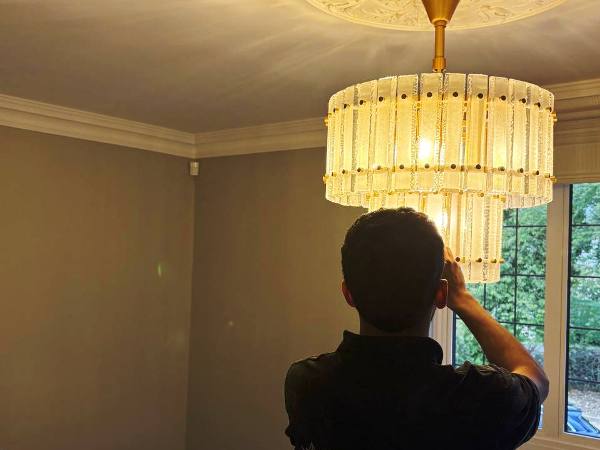
A chandelier in a commercial building is more than a lighting fixture. In hotels, restaurants, offices, luxury residences, galleries, and event venues, it often acts as a central design feature that shapes the first impression visitors receive.
So, how often should a commercial building clean its chandeliers?
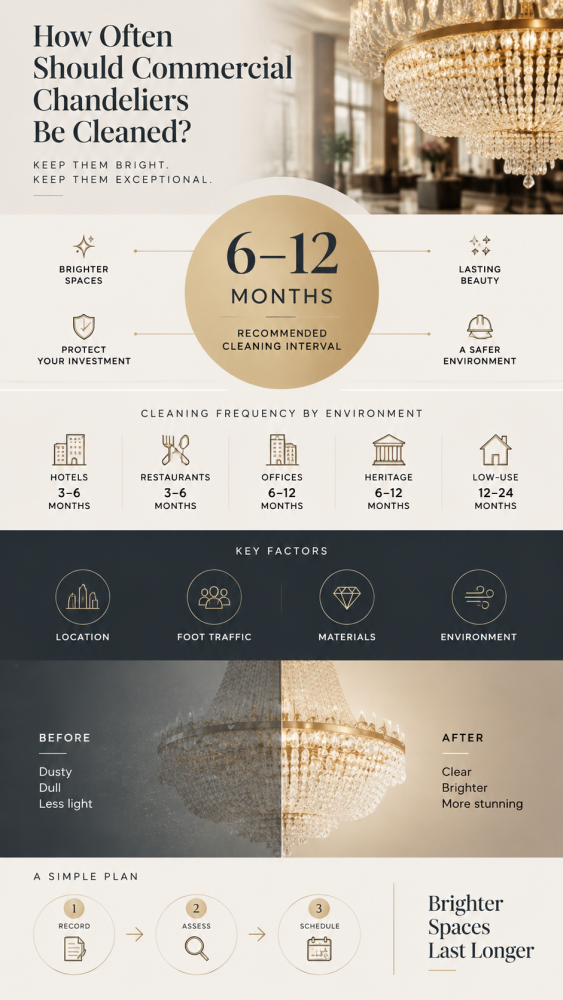
For most commercial properties, professional chandelier cleaning is recommended every 6–12 months, but the ideal schedule depends on factors such as location, foot traffic, air quality, chandelier design, and the environment where it is installed.
Regular maintenance protects the appearance, safety, and long-term value of expensive lighting installations. Neglecting cleaning can lead to dull crystal surfaces, reduced light output, dust accumulation, and potential safety issues.
This guide explains how often commercial chandeliers should be cleaned, what affects maintenance frequency, and how property owners can create an effective care plan.
Key Takeaways
| Core Insight | Practical Impact |
| Most commercial chandeliers need professional cleaning every 6–12 months | Maintains brightness, appearance, and presentation quality |
| Cleaning frequency depends on the building environment | High-traffic or polluted areas require more frequent care |
| Professional maintenance protects valuable fixtures | Reduces risks from improper handling and unsafe access |
How Often Should a Commercial Building Clean Its Chandeliers?
The recommended cleaning schedule depends on the type of building and how the chandelier is used.
A general maintenance guide:
| Commercial Environment | Recommended Cleaning Frequency |
| Luxury hotels and reception areas | Every 3–6 months |
| Restaurants and event venues | Every 3–6 months |
| Offices and corporate buildings | Every 6–12 months |
| Private clubs and heritage properties | Every 6–12 months |
| Low-use commercial spaces | Every 12–24 months |
Buildings with large entrances, open doors, heavy visitor traffic, or nearby construction may require more frequent cleaning because dust and airborne particles accumulate faster.
Why Does Regular Chandelier Cleaning Matter?
Maintaining Visual Impact
Crystal and decorative glass chandeliers rely on reflection and light dispersion. Dust, grease, and environmental residue reduce sparkle by creating a thin layer between the surface and the light source.
A clean chandelier allows:
- Better light reflection
- Improved room ambience
- A more luxurious appearance
- Stronger visual impact for guests and visitors
This is especially important in premium commercial environments where interiors influence customer perception.
Protecting the Chandelier Investment
Many commercial chandeliers are custom-made or contain delicate materials such as:
- Crystal drops
- Brass finishes
- Gold plating
- Antique components
- Decorative glass elements
Incorrect cleaning methods can cause scratches, finish damage, or loose components.
A frequent mistake is treating a chandelier like a normal light fitting. Large decorative fixtures require specialist handling because their structure, weight, and materials vary significantly.
Supporting Safety and Maintenance Standards
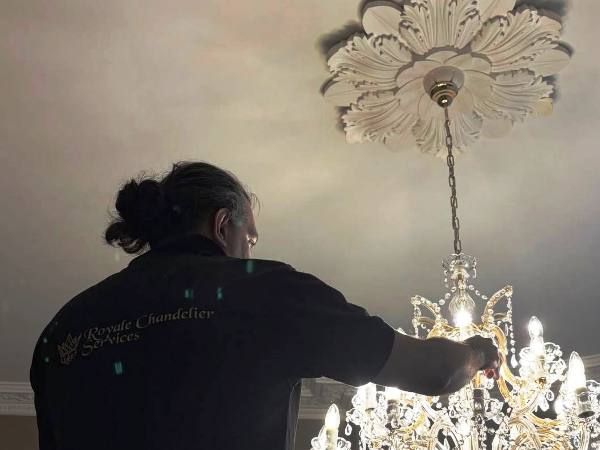
Commercial chandeliers are often installed at significant heights. Maintenance should consider:
- Safe access equipment
- Secure working platforms
- Electrical safety
- Structural condition
- Loose components
Professional inspections during cleaning can help identify early problems such as damaged wiring, unstable fittings, or weakened supports.
What Factors Affect Chandelier Cleaning Frequency?
- Building Location and Air Quality
A chandelier in central London may collect dirt faster than one in a quieter environment due to:
- Traffic-related pollution
- Open entrances
- Higher visitor movement
- Urban dust
Properties near busy roads or construction areas may need shorter cleaning intervals.
- Foot Traffic Levels
A hotel lobby or restaurant entrance experiences constant movement, which increases airborne dust.
High-traffic spaces usually require:
- More frequent inspections
- Regular dust removal
- Professional deep cleaning
- Chandelier Design and Materials
Different chandelier types require different maintenance approaches.
| Chandelier Type | Maintenance Consideration |
| Crystal chandeliers | Require careful cleaning to protect delicate pieces |
| Antique chandeliers | Need conservation-focused handling |
| Modern metal designs | May require specialist surface care |
| Large statement chandeliers | Often require access equipment and detailed inspection |
- Environmental Conditions
Cleaning frequency may increase in buildings with:
- Smoking areas
- Kitchens nearby
- High humidity
- Heating or ventilation systems creating dust movement
Restaurants are a common example because grease particles can affect decorative lighting.
Signs Your Commercial Chandelier Needs Cleaning
Property managers should schedule cleaning when they notice:
Visible Dust or Cloudiness
A chandelier that appears dull or grey usually has accumulated surface contamination.
Reduced Brightness
Dirty crystal surfaces scatter less light, making the fixture appear less impressive.
Uneven Appearance
Dark spots, fingerprints, or marks can become noticeable on close inspection.
Loose or Damaged Components
Cleaning appointments are an opportunity to check the fixture’s condition.
Professional Chandelier Maintenance Checklist
Use this checklist when planning commercial chandelier care:
Before Cleaning
☐ Identify chandelier materials and construction ☐ Review previous maintenance records ☐ Assess height and access requirements ☐ Protect surrounding furniture and flooring ☐ Switch off and isolate electrical supply where required
During Cleaning
☐ Remove dust carefully ☐ Clean crystal and decorative elements using suitable methods ☐ Check for loose parts ☐ Inspect wiring and support points ☐ Avoid harsh chemicals that may damage finishes
After Cleaning
☐ Confirm all components are secure ☐ Check lighting operation ☐ Record maintenance date ☐ Schedule the next inspection
DIY Cleaning vs Professional Chandelier Cleaning
| DIY Cleaning | Professional Cleaning |
| Suitable only for small, accessible fixtures | Suitable for large commercial installations |
| Higher risk of damage or accidents | Uses specialist methods and equipment |
| Limited inspection capability | Includes condition assessment |
| May not reach complex designs | Handles intricate structures safely |
For expensive commercial chandeliers, professional maintenance is usually the safer approach because replacement parts, repairs, and restoration can be costly.
How Commercial Buildings Can Create a Chandelier Maintenance Plan
A simple maintenance system helps prevent unexpected problems.
Step 1: Record Chandelier Details
Keep information about:
- Installation date
- Manufacturer (if known)
- Materials
- Previous repairs
- Cleaning history
Step 2: Assess Risk Level
Classify the chandelier:
High maintenance
- Large crystal fixtures
- Public areas
- High ceilings
- Heritage interiors
Lower maintenance
- Small decorative fixtures
- Controlled environments
- Limited visitor access
Step 3: Schedule Professional Reviews
Combine cleaning with inspections to identify issues early.
For London commercial properties requiring specialist chandelier cleaning, restoration, installation, or maintenance support, Royale Chandeliers provides premium chandelier services for residential and commercial environments across London and the UK. Their specialist services include chandelier cleaning, restoration, installation, removal, repair, and load testing.
Frequently Asked Questions
How often should a hotel chandelier be cleaned?
Hotel chandeliers usually require professional cleaning every 3–6 months because reception areas experience high visitor traffic, frequent air movement, and constant visibility. Luxury hotels often treat chandelier maintenance as part of their overall interior presentation strategy.
Can commercial chandeliers be cleaned without removing them?
Yes, many commercial chandeliers can be cleaned in place using specialist access equipment and appropriate techniques. Removing a chandelier is usually unnecessary unless repairs, restoration, or transportation are required.
What happens if a chandelier is not cleaned regularly?
A neglected chandelier may lose brightness, collect visible dust, develop surface damage, and require more expensive restoration later. Regular maintenance helps preserve both appearance and structural condition.
Is professional chandelier cleaning expensive?
The cost depends on factors such as chandelier size, height, materials, accessibility, and condition. Large crystal chandeliers require more specialist work than smaller fixtures, but scheduled maintenance can reduce long-term repair costs.
How do I choose a chandelier cleaning specialist in London?
Look for specialists with experience handling luxury lighting, safe working practices, appropriate access equipment, and knowledge of delicate materials. Commercial property owners should also check whether the company offers related services such as inspection, repair, and restoration. Contact us now!
Conclusion
Commercial chandeliers should generally be professionally cleaned every 6–12 months, with high-traffic locations such as hotels and restaurants often requiring more frequent attention.
The correct maintenance schedule depends on the chandelier’s materials, location, usage, and environmental conditions. Regular cleaning improves appearance, protects valuable fixtures, and helps identify potential safety issues before they become major problems.
For commercial properties in London that require specialist chandelier cleaning and maintenance, Royal Chandeliers offers premium chandelier care services designed for luxury and commercial environments.
Author Information & Trust Section
This guide was prepared using trusted industry sources and reviewed for accuracy, clarity, and usefulness.